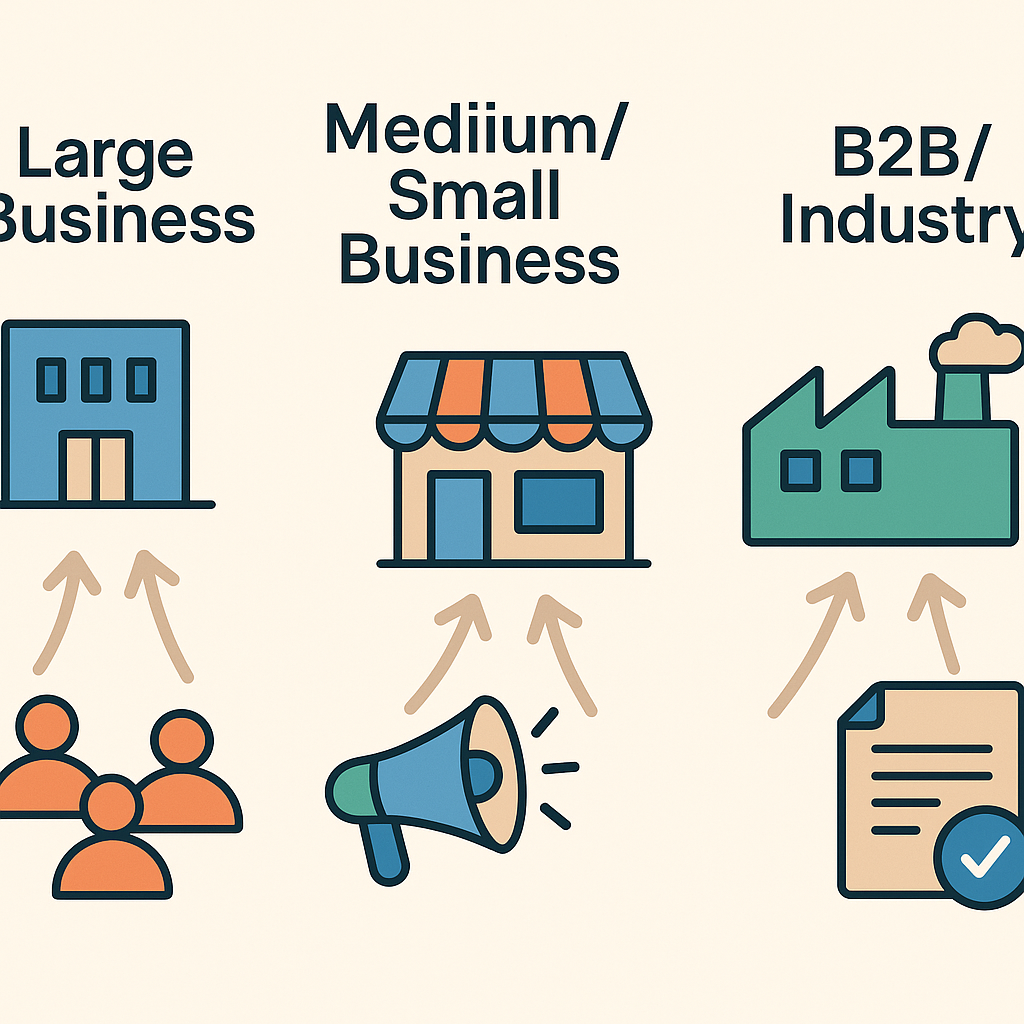
Where clients come from for: small, medium, or large businesses
Any business lives thanks to its clients. No clients — no sales. No sales — no movement.
This is universal: both for a small coffee shop and for a state-owned enterprise.
But: where clients come from depends on the type of business.
These are the ones who cover mass needs: food, housing, transport, pharmacies, utilities.
They have:
🔸 Example: a grocery retail chain. We go there not because we like the brand, but because it is close, fast, cheap.
Here it is the opposite:
🔸 Example: a craftsman who builds terraces. If he does not show his work, does not build trust, does not help the client — the client will choose someone else.
They have:
🔸 Example: a factory that produces insulation. Its client is not the end user, but a contractor on a budget construction project.
Conclusion: marketing is not advertising, but a way to build a flow of clients if it is not automatically built into your system.
Large businesses can survive even without marketing (but with budgets and politics).
Small and medium businesses without a client attraction system — die.
Therefore, advertising does not save if there is chaos inside: it only amplifies what already exists.
Any business lives thanks to its clients. No clients — no sales. No sales — no movement.
This is universal: both for a small coffee shop and for a state-owned enterprise.
But: where clients come from depends on the type of business.
- Large business = large flow, often “guaranteed in advance”
These are the ones who cover mass needs: food, housing, transport, pharmacies, utilities.
They have:
- often access to resources at the state level (land, logistics, contracts);
- the client comes not because the business is nice, but because it is the only one, the closest, or mandatory;
- marketing can be secondary, especially if price or scale “pull” the client themselves.
🔸 Example: a grocery retail chain. We go there not because we like the brand, but because it is close, fast, cheap.
- Medium and small business = the client flow needs to be earned
Here it is the opposite:
- no one is obliged to buy from you;
- every client is the result of correct work: positioning, service, advertising;
- marketing = not banners, but a system of building trust and contact.
🔸 Example: a craftsman who builds terraces. If he does not show his work, does not build trust, does not help the client — the client will choose someone else.
- B2B purchasing / industry = flow through agreements and participation in the system
They have:
- often no showcases and advertising, but there are tenders, partnerships, budgets;
- they do not promote to the mass market but integrate into a chain (for example, the city buys concrete not because of good advertising, but because there is an agreement).
🔸 Example: a factory that produces insulation. Its client is not the end user, but a contractor on a budget construction project.
Conclusion: marketing is not advertising, but a way to build a flow of clients if it is not automatically built into your system.
Large businesses can survive even without marketing (but with budgets and politics).
Small and medium businesses without a client attraction system — die.
Therefore, advertising does not save if there is chaos inside: it only amplifies what already exists.